The best backpacking equipment is both lightweight and durable. While traditional backpackers may carry 35-60 pound packs when loaded, lightweight backpackers try to carry a 10-20 pound base pack weight (without food, water or fuel) and ultralight backpackers aim for 5-10 pounds base pack weight.
Typical costs:
The most basic backpacking needs are the pack, a tarp or tent and a sleeping bag and pad. Most backpackers also want a stove to heat food and beverages. Total costs for backpacking gear can run anywhere from $300-$2,200 or more. An ultralight backpacking enthusiast[1] says the average ultralight backpacker spends between $1,000 and $2,000 on gear, but that it's possible to get everything needed for less than $700 or, with a bare-bones approach, only $250.
Multi-day backpacks (with a built-in frame) start as low as $50-$60 in discount stores, but may not be durable or designed to carry a load properly. Expect to pay $90-$300 for a backpack, like The North Face Terra 45[2] at $130 (weighs 3 pounds, 14 ounces) or the Gregory Baltoro 70[3] at $230-$290 (weighs less than 6 pounds). All-weather expedition-quality packs can cost $300-$600 or more, like the Osprey Argon 110 at $420 (weighs less than 6.5 pounds).
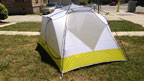
An ultralight backpacking tarp shelter can start between $20 and $40, but they tend to cost $50-$200 or more (depending on size and materials, and whether poles and guy ropes are included), like the Kelty Noah's Tarp ($60-$70). Backpacking tents start between $40 and $70; run $100-$250 for larger and more durable versions; and can be $300-$500 or more for mountaineering tents designed for cold weather conditions. For more details, see How Much Does a Camping Tent Cost. Or, instead of hauling a tent use a bivy (also called a bivouac sack or solo shelter, a thin waterproof fabric shell designed to slip over a single sleeping bag) for $50-$320, depending on design and materials. The North Face Backpack Bivy[4] sells for $160-$200.
Sleeping bags for backpacking are typically mummy style, meaning they're narrower at the feet than at the head, and hug the body (less air space to keep warm, and less weight to carry -- and they can be used in any conditions, not just cold weather). Sleeping bags can cost $65-$660 depending on temperature ratings, synthetic or down insulation and features like high-quality zippers. Examples are the Mountain Hardwear Women's Lamina 20[5] at $110-$170 (rated to 20 degrees) and The North Face Solar Flare[6] ($500-$520), rated to 20 degrees below zero. Lightweight sleeping pads start around $15-$30 for simple foam but can be $35-$180 for inflatable or self-inflating models. For increased warmth at night, sleeping bag liners are made from cotton, polyester, silk or a blend. Theycan cost $15-$90.
Visit-to-KL.com gives 10 tips for preparing for a backpacking trek[7] , and Gorp. com provides a packing list[8] .
Torso length is what determines the size pack suspension that each person should use. The goal is to have 80 to 90 percent of the load weight resting on the hips. When trying on packs, put sandbags or other weight in the pack to get a sense of how it fits. AdventureSportsOnline.com lists guidelines for the best backpack fit[9] .
Additional costs:
Many wilderness areas require a backcountry permit for anyone staying overnight. The Grand Canyon National Park, for example, charges $10 for a backcountry permit[10] plus $5 per person per night camped below the canyon's rim and $5 per group per night above the rim -- plus the park entrance fee of $12-$25.
Lightweight, dehydrated, prepackaged backpacking food can cost $4-$15 for a meal for two people; buying only prepared backpacking food can be expensive. The Washington Trails Association posts recipes[11] .
Discounts:
It's possible to rent backpacking gear from sporting goods stores like REI[12] , although the selection may be limited. LowerGear.com[13] rents backpacks for $35 a week, backpacking sleeping bags for $21-$39 a week each, and a backpacking stove for $9 a week, plus UPS shipping costs from Arizona.
There are online instructions for constructing an alcohol stove[14] and an ultralight pack.
Shopping for backpacking equipment:
Manufacturers of backpacking equipment include Coleman[15] , Gregory[16] , Jansport[17] , Kelty[18] , Mountain Hardwear[19] , The North Face[20] and Osprey Packs[21] .
Trailspace.com provides guidelines for choosing a backpack[22] and user reviews of backpacks[23] , tents[24] , sleeping bags and pads[25] , and stoves and cookware[26] .
REI lists tips for choosing a tent[27] , bivy sack[28] , sleeping bag[29] and stove[30] .
7 Lesser-Known Discounts for the 50+ Crowd As they age, members of the Baby Boomer generation don't like to admit that they're senior citizens, but they love getting discounts. It's kind of a quandary, because some of the best deals available are reduced prices for older folks. || Posted October 21 2013
7 Ways to Stretch Your Reduced Food Budget End of the year budgets are tight for everyone, especially in this economy.It's especially hard for the millions of Americans who depend on government programs like food stamps to help make ends meet. || Posted November 11 2013
CostHelper is based in Silicon Valley and provides consumers with unbiased price information about thousands of goods and services. Our writers are experienced journalists who adhere to our strict editorial ethics policy.
CostHelper Community
UTI urgent care visit Paid: 147.00 Visit was $135. Antibiotics was $12. Waiting for four hours in the waiting room and the visit was quick... [more]
Spanish Medical Interpreter Paid: 150.00 I worked with SynShyne Services out of Monroe, NC. They were so worth the price! Professional, friendly, accurate, great attitude and always on time. I recieved an itemized report after every contact and a user friendly invoice weekly... [more]
Skin prick allergy test Paid: 573.00 Took my 9 yr. old in after an allergic reaction to eggs. Several panels for nuts, fish & top 8 allergens. Sure enough, egg came up. Got a script for epinephrine and left... [more]






 Post
Post